
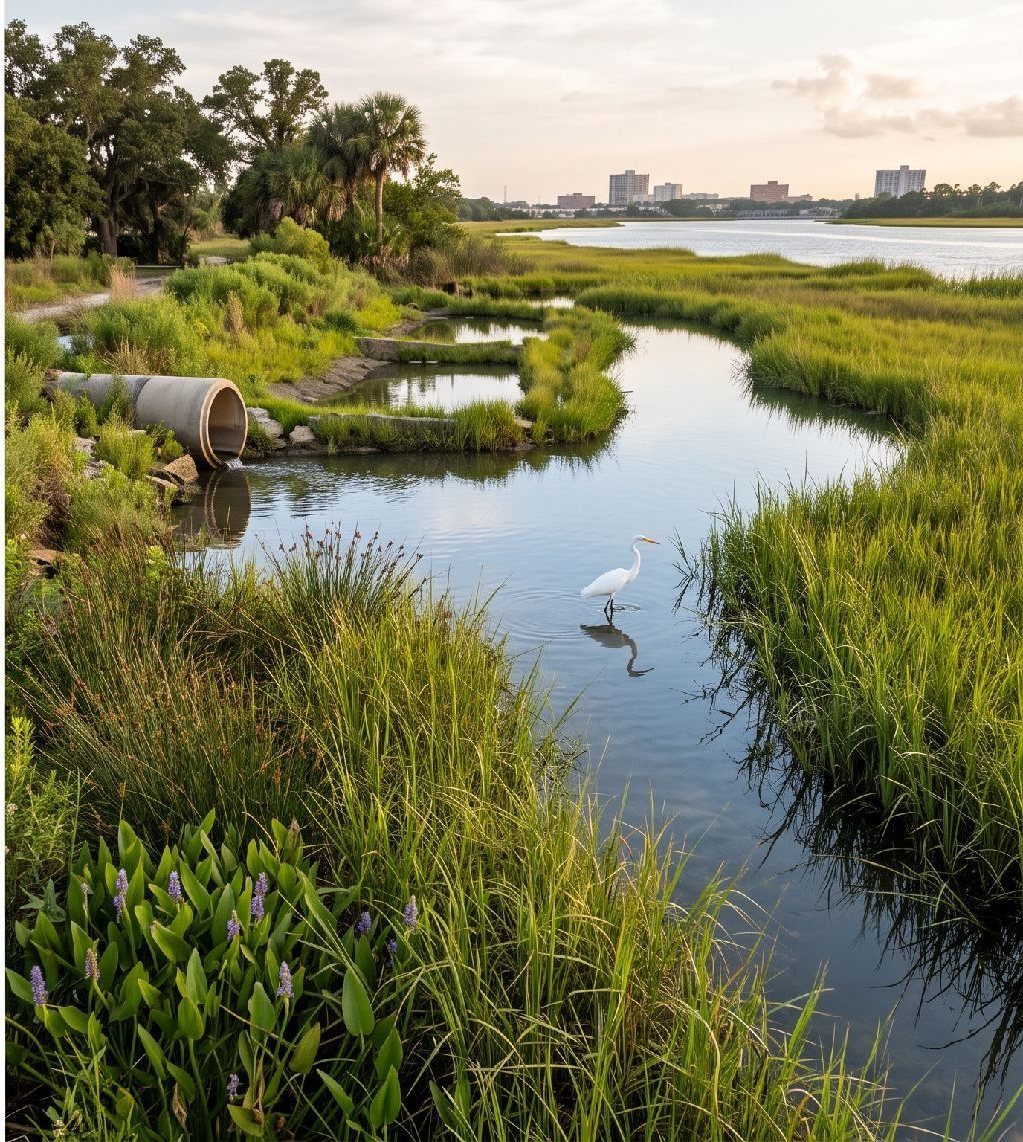
Project concept · Use case 6 of 8
Outfall treatment wetlands for bacteria and nutrients
We mapped every impaired creek, then chose where outfall wetlands would help most.
City of Jacksonville · Ribault and Trout Rivers
The project
The problem
The St. Johns River's main channel is in fairly good shape; its urban creeks are not. In the basin, 81 waterbodies fail the fecal bacteria standard and six fail in every sample.
What sets it apart
We turned the 2025 State of the River Report into a heat map, overlaid City outfalls and existing wetlands, and narrowed it to five areas. When staff asked whether wetlands store bacteria, our university advisors answered.
- Where
- City of Jacksonville
- Scale
- 5 candidate outfall areas; 1 to 3 acres per wetland
- What we provided
- Impairment heat map, outfall and wetland overlay, and a site shortlist
Who helped shape this concept
-
 University of Florida Scientists reviewed the concept and answered City staff's question on whether wetlands store bacteria
-
 University of South Florida Scientists reviewed the concept
- C-HAWQ technical advisors Certified erosion control (CPESC) and ecological restoration (CERP) professionals
- City of Jacksonville staff Sustainability and resilience staff set the priority watersheds
See it
Renderings, maps and media
-
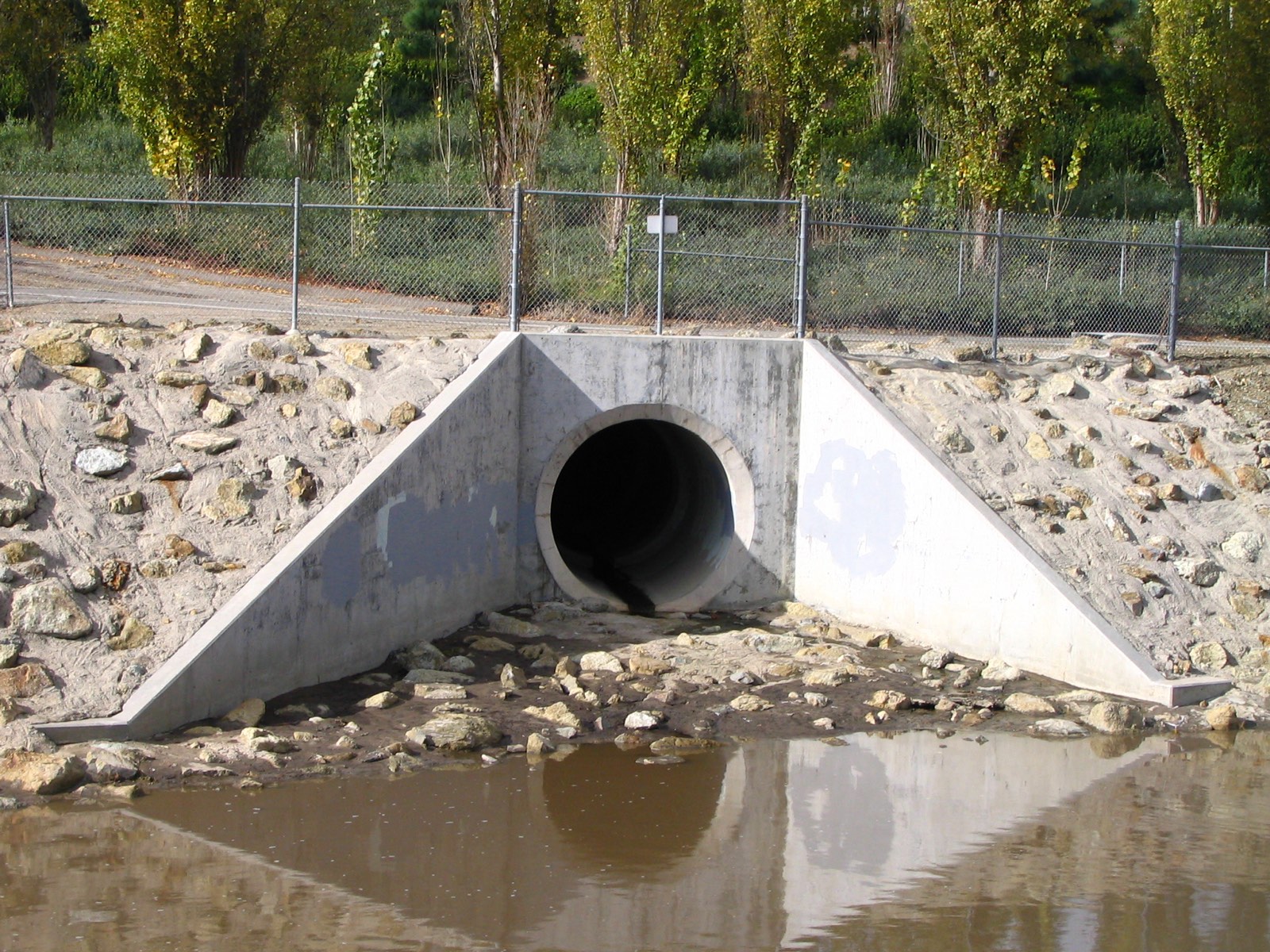
A typical unplanted stormwater outfall. Representative photo, not a Jacksonville site. Photo: Shannon1, Wikimedia Commons, CC BY 3.0. -
The concept illustration, prepared by C-HAWQ. -
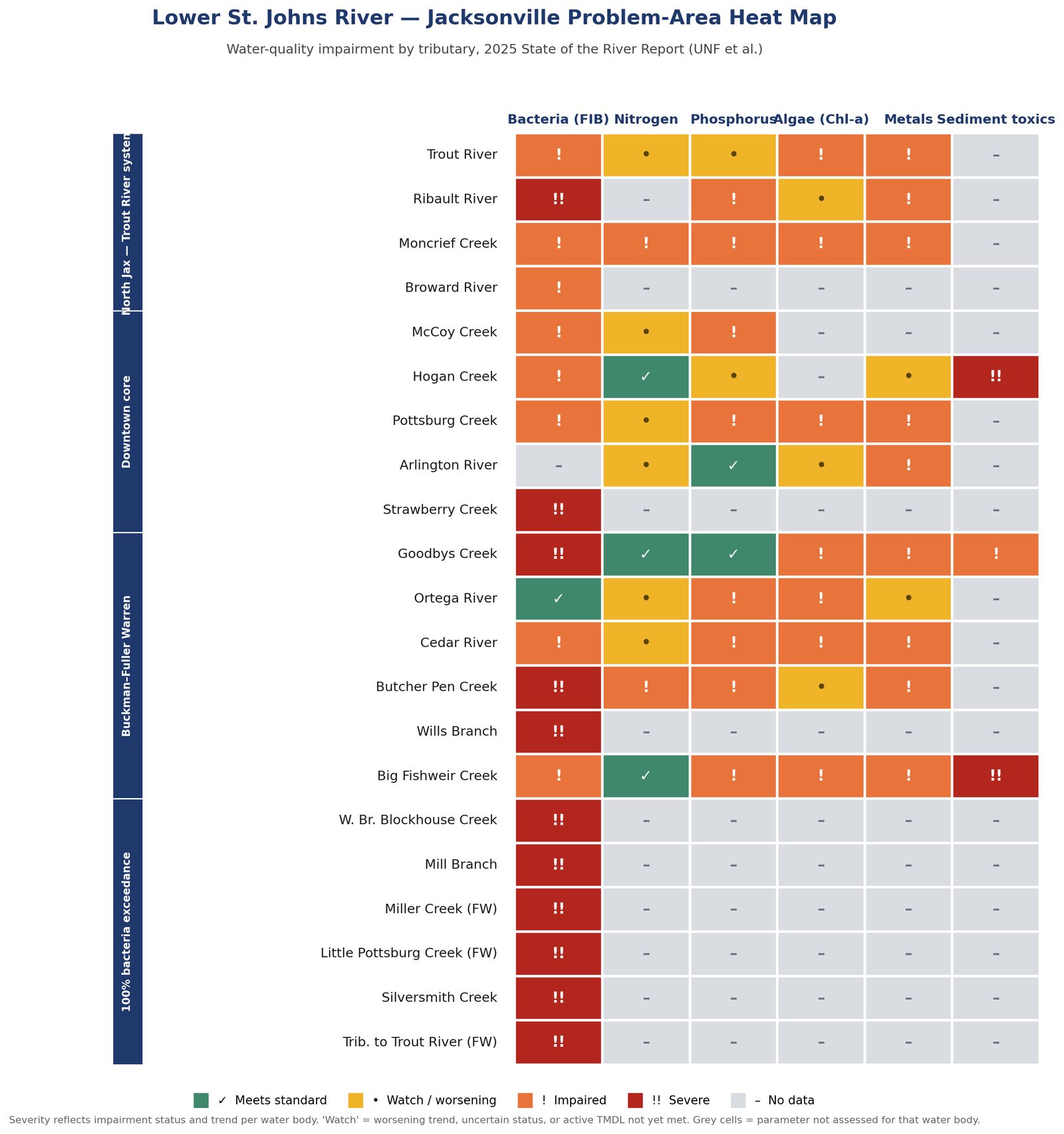
C-HAWQ's heat map of the 2025 State of the River Report. -
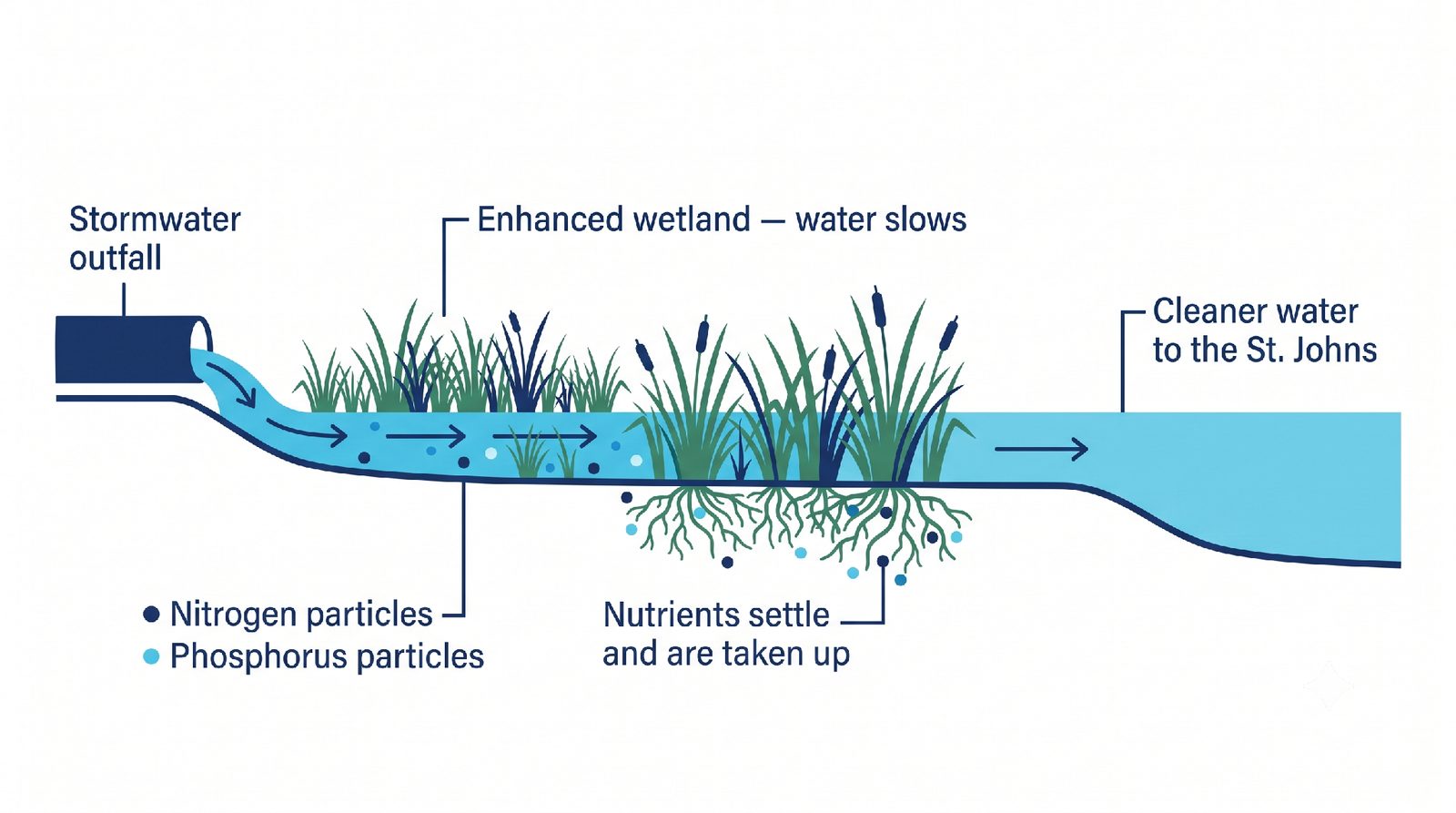
How a filter wetland works at an outfall. Based on U.S. EPA, Constructed Treatment Wetlands (2004) and Chukwudi, Peterson and Nicodemus, a five-year study of a floating wetland in Chicago (Urban Science, 2025).

Want to see the full concept? Ask us for it, and we'll share what's ready to be public.
How we got here
Where the project stands in our proven process
- 1. Discovery Done
City sustainability and resilience staff named their priority watersheds: Goodbys Creek and the Ribault and Trout Rivers.
- 2. Development Done
Built the heat map, overlaid outfalls and wetlands, and outlined five candidate areas.
- 3. Mobilization Done
Took City staff's bacteria question to our university advisors and technical partners, and brought back answers.
- 4. Close Next
We prepare a proposal the City can use to request and solicit the work, plus partners to design, build, fund and research it.
Want a project like this for your waterway?
Our fee-free technical assistance brings the science, the experts and the proposal. There is no fee, obligation or match at any point.