Marco Island, FL - Canal Restoration
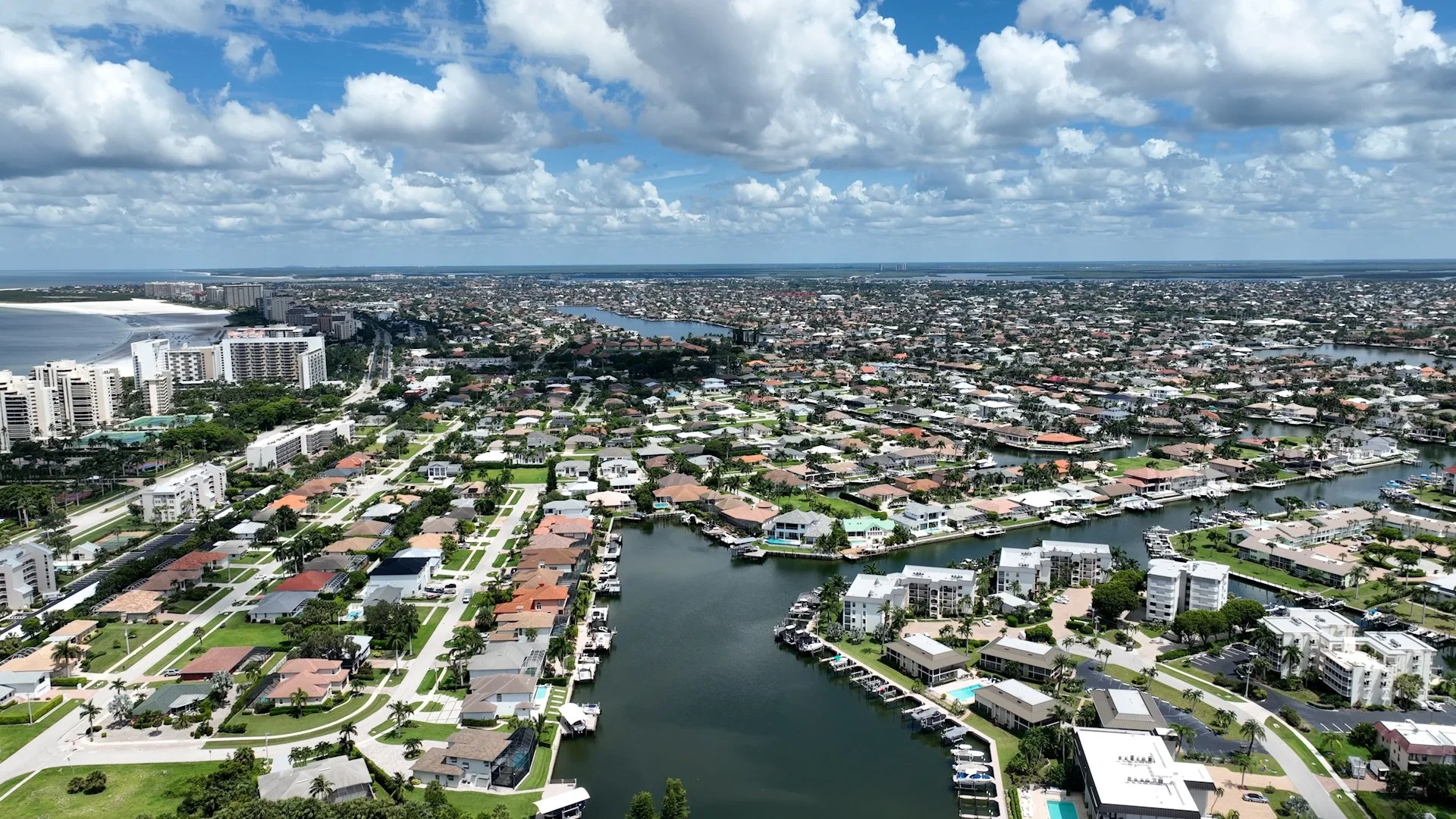
According to the 2021 Nutrient Source Evaluation Report conducted by Environmental Research & Design, Inc. (ERD), Marco Island’s primary water quality challenge is nutrient impairment, specifically excess nitrogen, which has led to its listing as an "impaired" waterbody by the Florida Department of Environmental Protection (FDEP). Scientific analysis of the island's unique hydrology reveals that while off-shore tidal waters provide the baseline water quality, this incoming water is often already impaired. As these waters enter the extensive canal system, nutrient levels are significantly enhanced by internal and watershed-driven sources, leading to algal blooms and declining water clarity.
The ERD report identifies internal recycling from bottom sediments as the most significant contributor, accounting for 61% to 77% of the annual total nitrogen load depending on the sub-basin. This occurs most rapidly in deep, stagnant canal areas where anaerobic (oxygen-starved) conditions trigger the release of nutrients from the muck. Groundwater seepage is the second-largest source, contributing 15% to 30% of the nitrogen load. This seepage is heavily impacted by human activities: isotope analysis confirmed that landscape fertilizers and excessive reuse irrigation—which is often applied at rates far exceeding what the turfgrass can absorb—percolate through the porous soil directly into the groundwater and eventually the canals.
To address the build-up of organic muck, the report evaluated a potential large-scale hydraulic dredging project to physically remove the accumulated sediments. However, ERD provided a staggering cost estimate of approximately $189.8 million for this initiative. This figure includes the logistical complexity of dredging over 1,500 acres of waterways, but a significant portion of the cost is driven by the fact that the island lacks any remaining vacant land large enough to act as a containment area for the dredged slurry. Consequently, an off-island parcel of roughly 824 acres would need to be purchased, adding an estimated $41.2 million in land costs alone. Ultimately, ERD recommended against dredging, deeming it "prohibitively expensive" and noting that it likely wouldn't eliminate all internal recycling, instead prioritizing lower-cost source controls like better irrigation management and specialized "denitrification" beds.
The Challenge
*Calculations based on 2021 Nutrient Source Evaluation (Table 5-10). Figures represent average annual total nitrogen (TN) loading.
The C-HAWQ Solution
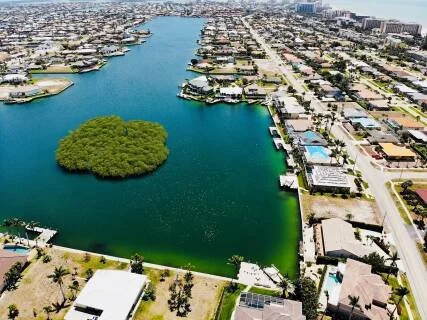
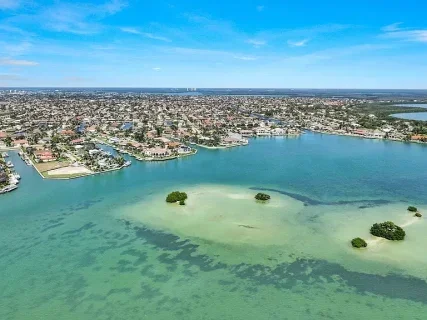
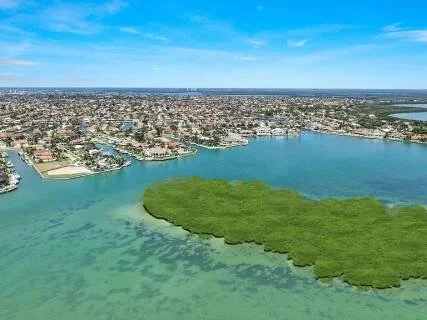
To address the primary driver of water quality degradation—specifically the 61–77% of nutrient loading originating from sediment release—we would utilize amphibious excavators to mechanically dredge the canal floor. These excavators, equipped with state-of-the-art positioning and guidance systems, carefully extract the nutrient-rich sediment and load it onto a small fleet of specialized barges. These barges navigate the waterways to deposit the material into a reinforced limestone framework, which serves as the foundation for new habitat islands. Native mangroves, sea grasses, and oyster reefs are then planted to secure the top layers, transforming the dredged material into a stable, living ecosystem.
This mechanical approach is significantly more efficient than hydraulic dredging, as it eliminates the need for disruptive road closures and the high cost of transporting wet slurry over long distances. By building these islands directly within the canals, we drastically reduce transport logistics and project expenses while effectively sequestering the sediment-based nutrients that fuel water quality issues. Beyond the cost savings, this method provides a self-sustaining solution: the new vegetation continuously filters the water, provides a vital nursery for keystone species, and creates up to 100 acres of natural space for Marco Island.
How It Works
Sediment Removal
Sediment in the canals is already frequently re-disturbed by boating and storms and continues to rerelease nutrients into the water. By removing this sediment it would remove the nutrients that are being resuspended, which is degrading the water quality.
Mangrove Communities
Land sites would be partially vegetated with mangroves, which have proven in projects around the globe to be incredible water sequestration and filtration species. Scientific studies have shown mangroves and salt marshes can remove 70% of nitrogen and 80% of phosphates in runoff, improve dissolved oxygen, and remove suspended solids.
Creation of Habitat
By using mangroves, seagrasses, and oyster reefs on the land sites, it would create habitat for animals that filter particulates and attract other species, diversifying the ecosystem in the canals, indirectly improving the water quality. For example, oyster reefs would attract macro-invertebrates (clams, oysters, shrimp, etc.) and eat particulates and microorganisms, which would improve the water quality directly.
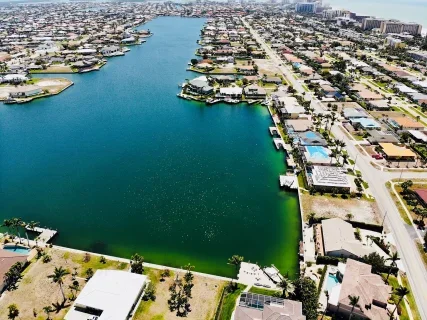
What These Island Could Look Like